
Lutz homeowners face a unique set of plumbing challenges due to Florida’s geology, especially the sandy soil that dominates the region. Understanding how sandy soil damages underground sewer lines in Florida can help you prevent unexpected pipe emergencies, costly repairs, and protect your home’s value. Many aging homes in Lutz and across Tampa Bay are at risk, especially as sandy soil causes sewer pipe sink issues, bellied lines, and more. In this guide, we’ll explain why these problems occur, what warning signs to look for, and how professional help can safeguard your plumbing investment.
- Quick Checklist
- How Sandy Soil Weakens Sewer Systems in Lutz
- Spotting Pipe Sinks, Bellies, and Broken Sewer Lines
- Sewer Line Replacement Options in Florida Soil
- Practical Prevention and Maintenance Strategies for Lutz Residents
- Frequently Asked Questions
Quick Checklist
- Monitor for soggy patches in your yard after rainfall
- Schedule annual plumbing inspections for aging sewer systems
- Have a plumber check for bellied or sunken lines beneath sandy soil
- Address persistent clogs to prevent major sewer damage
- Request a camera inspection if you notice slow drainage or foul odors
How Sandy Soil Weakens Sewer Systems in Lutz
Sandy soil is notorious across Lutz, Tampa, and Hillsborough County for its inability to securely support underground pipes. Unlike clay or loam, sand particles shift easily, offering little resistance to erosion or movement during heavy Florida storms. Over time, this constant shifting removes the stable bedding around sewer pipes, leaving them vulnerable to gaps and settling. Combined with the region’s humid climate and frequent rain, these conditions accelerate the breakdown of older materials like clay or cast iron used in many Tampa Bay homes built before the 1990s.
Older sewer lines, especially those made from clay, are particularly susceptible to breakage in sandy soil environments. The movement of the sand slowly erodes the bedding and can cause the pipes to drop or misalign. When sudden downpours hit and the sandy ground becomes saturated, these changes happen even faster, leading to more frequent plumbing emergencies. Local plumbing codes now take these geological risks into account, requiring deeper pipe bedding and more robust materials for repairs and new installations.
Humidity and residual minerals from hard Tampa municipal water supply further interact with sandy soil to corrode pipe surfaces. Over years, a combination of sediment buildup from runoff and exposure to Florida’s coastal salt air works together to eat away at unprotected pipes. All of these pressures worsen the effects caused by sandy soil, increasing the risk of a bellied sewer line or outright break.
Spotting Pipe Sinks, Bellies, and Broken Sewer Lines
One of the most telling signs of sewer trouble in Lutz is the bellied sewer line—a scenario where part of the pipe sinks lower than the rest, forming a dip that traps water, waste, and debris. When sandy soil undermines pipe bedding, sewer lines can sag, causing blockages and slow drains. Homeowners often notice repeating clogs, foul outdoor odors, or unusually lush grass especially after periods of wet weather.
The sandy soil pipe sink phenomenon is common after major rain events or construction nearby. When the soil shifts or washes away, unsupported pipes begin to buckle, crack, or even collapse. For homes built decades ago, this often leads to a broken clay pipe or recurring drain problems. In many Tampa homes built before the 1990s, calcium buildup inside drain traps is extremely common and often goes unnoticed until drainage slows significantly.
Detecting these problems before they escalate is critical. Plumbers in Lutz often use camera inspections to spot misaligned or sunken lines before a total blockage or sewer backup occurs. If you find yourself needing to plunge the same drain again and again, or you notice persistent wet patches in the yard that don’t dry out, these might be signals that your underground pipes have been compromised by sandy soil movement. Learn more about environmentally friendly ways to clear clogs by checking out our post on natural drain cleaning here.
Sewer Line Replacement Options in Florida Soil
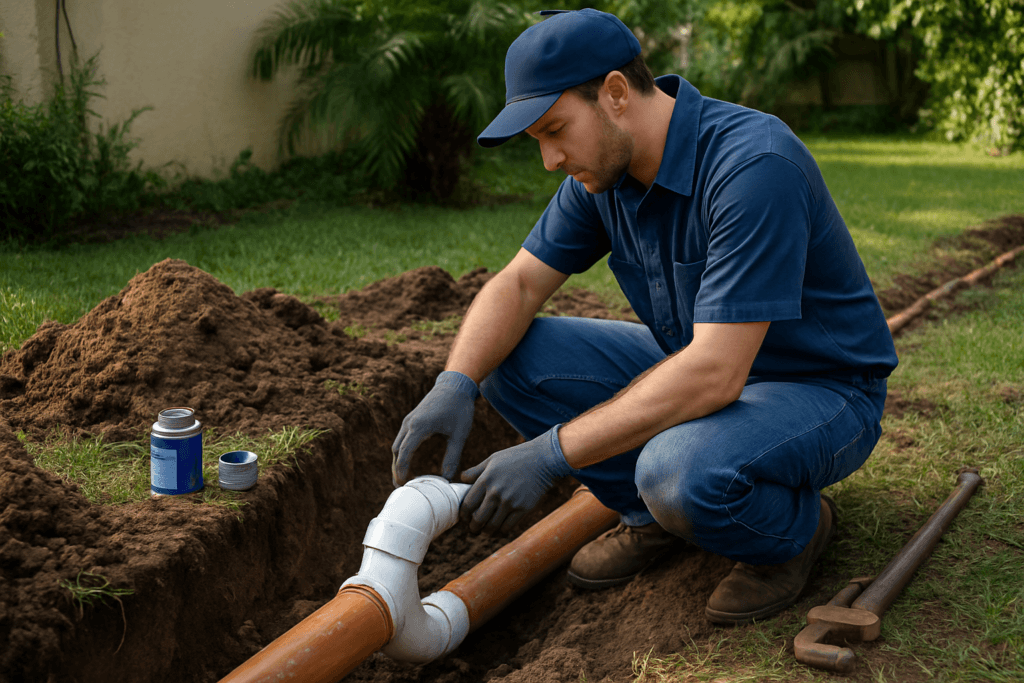
When faced with a bellied sewer line or broken clay pipe in Lutz, homeowners have several sewer line replacement methods to consider. Trenchless pipe replacement is popular in the Tampa Bay area because it allows plumbers to install new pipe with minimal disruption to landscaping and existing hardscaping. This method works particularly well in sandy soil because it stabilizes the line without prolonged excavation, reducing the risk of further collapse or soil washout. Traditional trenching is sometimes needed for severely collapsed pipes, though it comes with higher costs and more property disruption.
Modern replacement materials like PVC or HDPE are designed to withstand both Florida’s shifting sandy soils and corrosive salt air. Unlike outdated clay or cast iron, these materials are more flexible, minimize root intrusion, and resist mineral buildup from hard municipal water supplies. Lutz plumbing professionals also use extra gravel bedding, compacted to municipal code standards, to prevent future sagging and create a long-lasting solution that stands up against seasonal hurricanes and flood events common in Hillsborough County.
Cost varies based on severity, length, and access. For Lutz residents, average sewer line replacement can range from $3,000 for short segments of accessible line to $12,000 or more for complete system overhauls or deeper excavation in unstable soil. It’s important for homeowners to weigh long-term savings against repeated emergency repairs, which can quickly add up. Choosing a locally experienced plumber ensures compliance with Florida plumbing codes and restoration of soil conditions for future stability. For more information about comprehensive drain and sewer cleaning solutions, visit our drain service page.
Practical Prevention and Maintenance Strategies for Lutz Residents
Lutz homeowners can take several steps to minimize the risk of sandy soil damage to underground sewer lines. Regular plumbing inspections, especially for homes over 30 years old, catch small shifts before they turn into large repair projects. Many local plumbers recommend annual camera inspections and proactive maintenance for homes in areas known for sandy conditions or where trees grow near buried pipes. Small root invasions or pipe misalignments can be addressed before they wreck the whole line.
Managing yard drainage is another local strategy. Planting hardy grass or ground cover helps stabilize sandy soil, especially on properties that slope or see heavy water runoff during Tampa’s rainy season. Homeowners should be cautious about adding structures or heavy landscaping on top of sewer runs, as added weight can trigger sandy soil pipe sink issues or worsen any minor misalignments that already exist below.
Flushing only approved materials, avoiding caustic drain cleaners, and promptly clearing minor clogs reduces stress on pipes weakened by soil movement. Experience shows that even the smallest leaks, left unchecked, can wash away bedding, causing pipes to shift and break. With routine maintenance, prompt repairs, and environmentally friendly cleaning options highlighted in EPA drinking water guidance, homeowners in Lutz and Tampa Bay can extend the lifespan of their plumbing systems while protecting regional groundwater quality. If you notice foul odors, gurgling drains, or unusual lush spots in your yard, don’t ignore them—call a qualified Lutz plumber to check your lines before expensive emergency repairs are needed.
Don’t Wait for Major Sewer Trouble—Call Lutz’s Local Drain Specialists
With Lutz’s combination of sandy soil, heavy storms, and aging home infrastructure, regular plumbing maintenance is your best defense. If you’re worried about how soil movement or pipe damage could threaten your sewer lines, reach out to our expert team at Hot Water Heroes Plumbing. We provide thorough inspections, advanced solutions, and honest advice on repair versus replacement so you can make the right decision for your home. Protect your property’s value and prevent stressful emergencies—get your plumbing assessed today.
Frequently Asked Questions
How Does Sandy Soil Typically Damage Underground Sewer Lines?
sandy soil shifts easily, causing pipes to sag, misalign, or break. frequent storms and runoff erode support bedding, hastening pipe damage. this leads to sewer backups or persistent clogs in lutz homes. annual inspections can help catch these problems early.
What Are Signs of a Bellied Sewer Line in Lutz?
common signs include slow drains, repeating clogs, and foul odors near drains or out in the yard. sometimes you may also see unexplained wet or soggy patches after rain. a camera inspection can confirm if you have a sewer belly or pipe sink issue. these symptoms usually worsen after heavy florida storms.
Can You Repair or Must You Replace a Broken Clay Pipe?
minor breaks or root intrusions in clay pipes might be patched temporarily, but repairs often fail in shifting sandy soil. most plumbers recommend replacement using pvc or hdpe to prevent future issues. replacement is costlier upfront but saves money on repeated emergency repairs. trenchless methods work well for many tampa bay homes.
How Much Does Sewer Line Replacement Cost in Lutz?
sewer line replacement can range from $3,000 for short segments to over $12,000 for complete replacements or hard-to-reach pipes. the final price depends on pipe location, length, and damage severity. local soil conditions and access influence project complexity. a professional plumber can give a precise estimate.
How Can Homeowners Prevent Sandy Soil Pipe Damage?
routine plumbing inspections, camera checks, and prompt clog removal help prevent major issues. maintaining good yard drainage and choosing stable ground cover also make a difference in sandy florida soil. don’t ignore small leaks, as they can erode support around pipes. if in doubt, call a professional for advice specific to lutz homes.


