
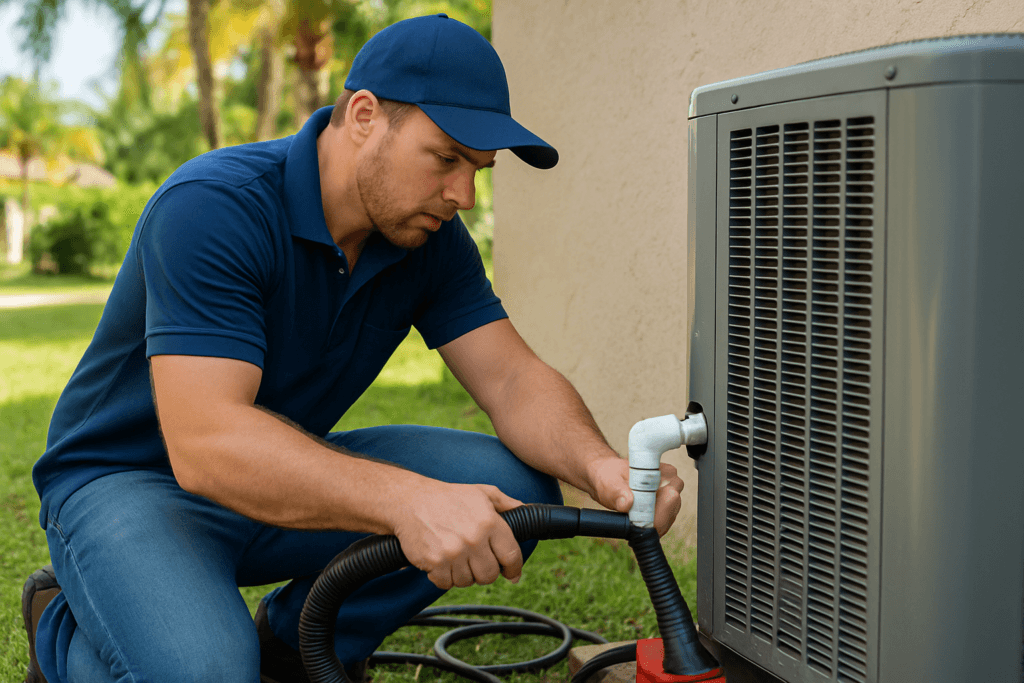
As summer heat returns to Tampa and humidity soars, preventing AC condensate line clogs in Florida summer becomes critical for homeowners. With heavy use, local air conditioners face a surge of moisture—and that means more risk of algae buildup in your AC drain, water leaking near ceilings, and sudden breakdowns that can threaten both comfort and property. Read on to understand why it happens more often in Tampa Bay, and practical steps to keep your AC drain flowing clean all season.
- Quick Checklist
- How Florida’s Summer Climate Drives Condensate Line Clogs
- Seasonal Best Practices for Cleaning Condensate Line in Tampa
- Signs of Algae Buildup and Water Leak Near the Ceiling
- Quick Checklist
- Frequently Asked Questions
How Florida’s Summer Climate Drives Condensate Line Clogs
Florida’s subtropical climate creates the perfect storm for AC condensate line problems, especially in high-humidity places like Tampa. As your air conditioner cools the hot, moisture-laden indoor air, gallons of condensation drain out each day—often much more during peak summer. The local water supply, naturally high in minerals like calcium and magnesium, can leave behind scale that traps debris inside these narrow drain pipes.
These conditions, combined with warm temperatures, often encourage rapid algae and mold growth within condensate lines. In homes across Hillsborough County, our technicians have observed that many blockages stem from a slimy layer of algae growing unchecked all summer. Once a clog forms, it blocks drainage, and water quickly backs up toward your air handler—sometimes resulting in a water leak from your ceiling or down the wall before you notice anything wrong.
Tampa’s older homes face additional challenges. Many properties built before the 1990s rely on aging plumbing infrastructure and may lack modern safety features like overflow shutoff switches. When these systems back up, local homeowners risk costly repairs for both water damage and hidden mold growth, especially after heavy storms. Preventive maintenance is especially important during the summer, when AC systems run hardest and blockages are most likely.
Seasonal Best Practices for Cleaning Condensate Line in Tampa
A proactive approach is essential for cleaning condensate line systems and preventing clogs. Many Tampa families schedule routine cleaning each spring, just before the full force of Florida’s summer hits. One effective method is to flush the drain line with a mixture of white vinegar and water every few months. This helps break down slimy organic buildup and can slow the stubborn algae growth AC drain pipes develop in our humid environment.
If you notice water pooling around your indoor air handler or a sudden musty smell in your utility closet, it’s time to investigate further. Newer systems might include cleanout ports for easy access, but older setups—especially those found throughout South Tampa and Seminole Heights—may require a professional’s touch. Cleaning out sediment, algae, and mineral deposits by hand or with specialized equipment can restore full flow and prevent water leaks from reaching your ceiling.
In many Tampa homes built before the 1990s, calcium buildup inside drain traps is extremely common and often goes unnoticed until drainage slows significantly. With seasonal storms sending extra humidity into the air, these hidden blockages can cause a backup with little warning. Our field experience shows that even a tiny restriction is enough to cause problems during the busiest months. If you’re unsure, connect with Hot Water Heroes Plumbing for a full inspection or check our drain cleaning service page to learn more about our Tampa-specific solutions.
Signs of Algae Buildup and Water Leak Near the Ceiling
It’s easy to overlook early signs of a condensate line clog, but a few key symptoms can warn Tampa homeowners before water damage becomes severe. If you notice water stains or bubbling paint near your ceiling—often just below the air handler in homes with attic AC units—act quickly. This is a classic warning that your condensation isn’t draining as it should, often because of an algae buildup AC drain issue that’s been brewing for weeks.
Musty or “wet sock” odors in the home, especially near closets or utility rooms, can also signal stagnant water inside the line or drain pan. Some homeowners in Tampa Bay report hearing an unusual gurgling or dripping sound coming from their AC closet after the unit cycles off; this often points to a clog forming in the line. Left unchecked, persistent humidity combined with slow drain lines almost always results in water leaking through the ceiling or walls, causing costly repairs for drywall, insulation, and even electrical systems.
Frequent clogs could also signal issues with the broader plumbing system. The Tampa municipal water supply’s mineral content can accelerate sediment buildup in all types of drains—including the condensate line. If your home is affected, you’re more likely to experience repeated blockages after heavy AC use each summer. It’s always wise to address these early and seek expert help if you see recurring symptoms.
Quick Checklist
- check for musty odors or damp spots near your air handler in early summer
- pour a cup of vinegar into the condensate line every three months
- inspect visible sections of the AC drain pipe for green or black algae buildup
- look for ceiling stains or cracked paint under attic AC units after heavy use
- schedule annual drain line cleaning with a licensed tampa plumber
Repair vs Replace: AC Drain and Plumbing Solutions for Tampa Homes
When a clog does occur, local homeowners often wonder whether they should repair the existing line or invest in replacement. The decision depends on the age and condition of your system, and the type of plumbing installed. Homes in Tampa’s coastal neighborhoods can experience extra corrosion from salt air, which accelerates wear on PVC and copper condensate lines. If your drains show signs of persistent leakage or scaling, replacing the affected section may prove more cost-effective in the long run.
For minor or first-time blockages, a thorough cleaning can typically restore your condensate line to full working order. Using approved solvents and high-pressure water—always in compliance with Florida plumbing codes—can eliminate even tough algae or sediment buildup. In some cases, adding a cleanout port or an inline algae tablet dispenser helps prevent future growth. Our experience shows, however, that older lines weakened by years of scale or salt intrusion are more likely to crack or leak. Severe water leaks from the ceiling are often only fully resolved by installing new, code-compliant drain lines, especially in older South Tampa and Hillsborough County homes.
When comparing costs, Tampa homeowners can expect to pay between $90 and $300 for a professional cleaning, but repairs involving extensive pipe replacement or ceiling restoration may exceed $1,000. Always consider the age of your plumbing and any signs of deeper issues. For tips on other plumbing maintenance, such as keeping your kitchen drains flowing between storms, check our recent guide on repairing jammed garbage disposals in Tampa.
Summer Readiness: Protecting Tampa Homes from AC Drain Disasters
Preparing your AC system for the demands of Tampa’s summer weather involves both preventive maintenance and rapid response to emerging problems. Clean condensate lines support not only efficient air conditioning but also healthier indoor air and protection against subtle water damage. It’s important to remember that storm runoff and persistently high humidity can overwhelm older or partially blocked lines in just days, particularly after a major thunderstorm fuels your AC’s workload.
Coastal salt air, unique to areas like Davis Islands, can degrade rubber grommets and plastic tubing in attic air handlers. This means Tampa homeowners need to be more vigilant, watching for leaks around walls and beneath ceiling registers. A simple annual inspection in late spring can catch many issues before summer heat and humidity intensify the risk. Scheduling routine maintenance with a plumber familiar with Tampa Bay’s hard water, climate, and Florida codes can catch small blockages and prevent large-scale repairs.
For those who value peace of mind, professional drain cleaning is a small investment with major rewards. Having a local expert spot weak spots or corrosion—before water stains appear or the ceiling gives way—can save thousands. For specific recommendations or schedule-friendly appointments, visit our dedicated Tampa drain cleaning page or consult EPA drinking water guidance for general best practices on maintaining safe, clear drains in humid climates like ours.
Don’t let a hidden drain blockage spoil your Tampa summer. Take action today with regular maintenance and expert support from the Hot Water Heroes Plumbing team. Whether you need seasonal cleaning or a complete system upgrade, our experience with Tampa’s unique climate and municipal challenges means you can enjoy your home, worry-free, all year long.
Frequently Asked Questions
How Often Should I Clean My AC Condensate Line in Tampa?
cleaning your ac condensate line every three months is recommended, especially during the humid summer months in tampa. regular cleaning helps prevent algae buildup and keeps your drains flowing smoothly. this also reduces the chances of water leaks in your ceiling and costly repairs. for older homes, more frequent checks may be wise.
What Causes Algae Buildup in My AC Drain?
algae and mold thrive in the warm, moist environment inside your condensate line—conditions common in florida’s climate. tampa’s naturally humid summers make this problem worse, especially if the line is not cleaned regularly. algae often grows faster when the drain is slow or partially blocked by sediment or calcium. regular maintenance is key to prevention.
What Are Signs I Need to Call a Plumber?
look for water stains or bubbling paint near your ceiling, musty odors, or a sudden increase in indoor humidity. if you see standing water around your air handler or hear strange gurgling from your ac drain pipe, call a tampa plumber right away. timely intervention can prevent severe water damage and high repair costs.
Can I Use Bleach to Clean My Condensate Line?
while bleach can kill some algae, it may damage ac system parts and is not always safe to use. vinegar and water are safer for routine cleaning in tampa homes. if blockages persist, it’s best to let a professional plumber use the right tools to clear the line without risking harm to your hvac or plumbing system.
How Does Tampa’s Water Affect My AC Drain?
tampa’s municipal water supply contains minerals like calcium and magnesium, which can lead to scale buildup inside drain lines. this scale can trap debris and worsen clogs, especially in older homes or where routine maintenance is skipped. regular cleaning tailored to tampa’s water quality helps extend the life of your ac plumbing.