
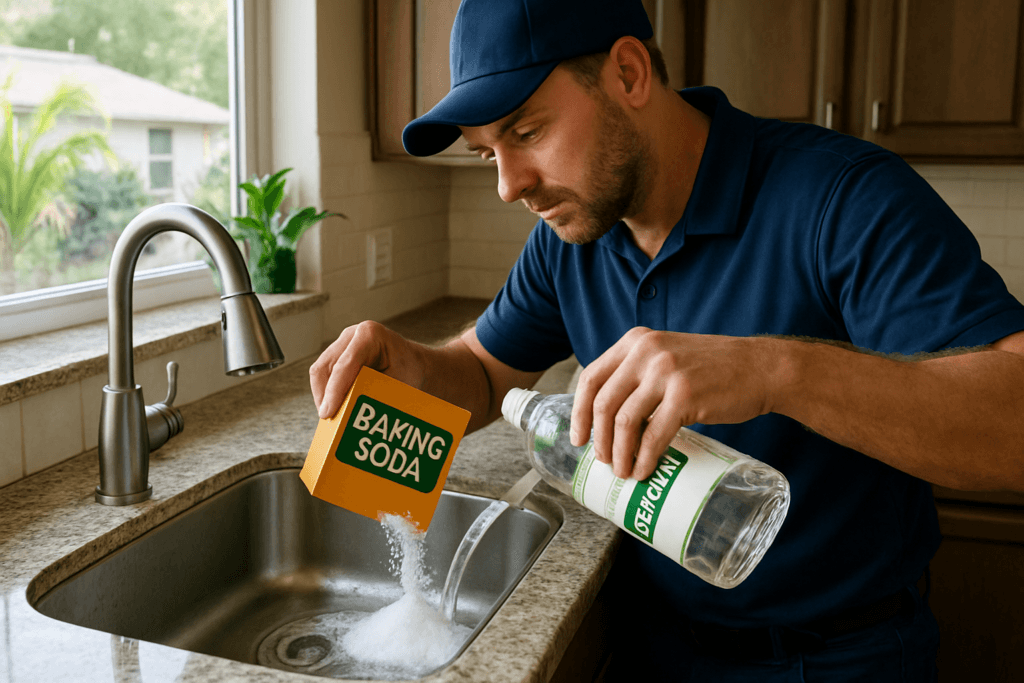
Every Tampa homeowner has faced it: a kitchen sink backing up at the worst possible moment. When clogs strike, you want an effective fix that’s safe for your home and environmentally friendly for our unique Florida climate. Wondering how to clear a clogged kitchen sink drain naturally? Before you reach for harsh chemicals, try these green, Tampa-tested methods to protect your pipes, your health, and our precious Tampa Bay waterways.
- Quick Checklist
- Natural Drain Cleaner Methods for Tampa Kitchens
- What to Do When Your Kitchen Sink Is Backing Up
- Why Baking Soda and Vinegar Work for Tampa Drains
- Using Boiling Water to Clear Clogs in Tampa
- Frequently Asked Questions
Quick Checklist
- remove visible food debris from the drain before starting
- try pouring boiling water down the kitchen drain first
- add baking soda followed by vinegar for a natural fizzing reaction
- wait ten minutes then flush again with hot water
- avoid overusing store-bought chemical cleaners in Tampa’s older homes
Natural Drain Cleaner Methods for Tampa Kitchens
Grease, food scraps, and hard water from the Tampa municipal supply can all contribute to stubborn clogs. Using a natural drain cleaner is often the safest first step. Common household ingredients like baking soda and vinegar react together, breaking down grime without harming the pipes or adding toxic chemicals to our local water system. Many Tampa properties, especially in older neighborhoods, have plumbing that’s more sensitive to caustic products, so these gentle solutions are recommended by experts.
Start by clearing any visible debris from your kitchen sink drain, then pour half a cup of baking soda directly in. Follow with a cup of vinegar, plug the drain, and let the mixture fizz for at least ten minutes. This reaction loosens organic buildup caused by food, soap, and Florida’s hard water minerals. Finish by flushing the mixture through with a kettle of boiling water. Not only does this tackle most moderate clogs, but it can also reduce lingering odors that are common in Tampa kitchens. In many Tampa homes built before the 1990s, calcium buildup inside drain traps is extremely common and often goes unnoticed until drainage slows significantly.
If the drain is still slow, repeating the process a second time can help clear stubborn areas where sediment collects. These natural methods are safe for both older copper pipes and newer PVC plumbing typical of Tampa Bay homes. They’re also recommended when stormwater runoff or coastal salt air increase corrosion risks, a frequent issue noticed by our field technicians during routine drain cleaning service calls. If after two cycles the water still drains poorly, it may be time to call a professional or check for greater pipe-scale buildup.
What to Do When Your Kitchen Sink Is Backing Up
The moment you notice your kitchen sink backing up, quick action can prevent water from spilling onto your countertops. Stop running additional water and avoid flushing more food or grease into the drain. Backups often happen suddenly in Tampa kitchens during large family meals, holiday gatherings, or after heavy summer rains increase groundwater and city drainage load. The aging plumbing infrastructure in some Hillsborough County neighborhoods can make this a regular occurrence, especially if roots have started infiltrating older lines.
Start with the easiest method: carefully pour boiling water into the sink. Boiling water can sometimes melt away greasy residue or dissolve small soap clogs before they become a major headache. Always use caution with boiling water, especially with older pipes, since coastal salt air and high humidity can weaken joints over time. If this first step doesn’t resolve the clog, turn to the baking soda and vinegar drain treatment already outlined above.
If neither natural solution does the trick, consider using a plunger with steady, even pressure. Avoid chemical drain cleaners as they can accelerate pipe degradation in many pre-1990s Tampa homes. Many local residents have found that persistent backups often point to deeper issues within the plumbing system, such as sediment buildup or partial blockages further down the line. For recurring blockages, it’s wise to consult with a Tampa drain cleaning specialist who can investigate potential causes like tree roots or compromised pipes. For more on replacing aging lines without excavation, see our article on trenchless sewer line repair in Tampa for a fast, less invasive repair option.
Why Baking Soda and Vinegar Work for Tampa Drains
Baking soda and vinegar have become a favorite combination among eco-conscious Tampa homeowners. In the warm, humid climate of Tampa Bay, organic material can quickly ferment inside drains, causing persistent odors and slow drainage. The natural chemical reaction between these household staples generates carbon dioxide bubbles, which help dislodge gunk stuck along the walls of pipes. This not only clears blockages, but also neutralizes bad smells without introducing phosphates or harsh solvents into your home or water system.
For those living near coastal water or in areas with harder water, like much of Hillsborough County, the presence of magnesium and calcium can aggravate clog formation. Using the baking soda and vinegar method helps physically break down some mineral crusts that trap grease and food. It’s a simple, budget-friendly approach suitable for newer neighborhoods like New Tampa, as well as for older homes in Seminole Heights.
Experienced plumbers in Tampa often recommend this natural combo first, because it is less likely than chemical cleaners to erode pipe linings or trigger leaks in areas weakened by years of Florida humidity and salt exposure. One real-world observation from our local techs: when used monthly, this green cleaning method can double the lifespan of a kitchen drain, especially in homes with frequent food prep or heavy use. For additional guidance on safe kitchen plumbing practices or to schedule a professional drain cleaning, visit our Tampa drain cleaning page.
Using Boiling Water to Clear Clogs in Tampa
Pouring boiling water down a clogged drain is often the simplest and quickest way to restore flow—especially for minor grease or soap buildup typical of Tampa kitchens. The heat works to melt fatty deposits, sending them along the pipes safely. Tampa’s hard water supply, with its elevated calcium and magnesium content, can combine with cooking fats to form stubborn “soap scum” deposits. Boiling water helps break up this crust and push it past the trap.
Keep in mind that in homes with PVC pipes or older metal lines showing signs of corrosion from coastal salt air, repeated use of boiling water could cause damage if not done carefully. Always pour slowly and in stages, using smaller amounts rather than dumping a large pot all at once. In rare cases, severe clogs may resist even this old-fashioned approach, indicating a blockage deeper in the waste line or potential pipe narrowing caused by years of scale.
For chronic clogs in Tampa homes, or if boiling water and natural drain cleaner methods fail, contacting a licensed plumber ensures safe, professional-grade cleaning. Local regulations also encourage Tampa residents to prioritize green cleaning methods to help preserve the health of our aquatic ecosystems. Refer to current EPA drinking water guidance for further tips on maintaining safe, sustainable plumbing practices.
If you’re tired of dealing with persistent kitchen sink clogs, or if these green methods haven’t restored normal drainage, consider calling Hot Water Heroes Plumbing. Our team knows the quirks of Tampa’s aging pipes, seasonal weather patterns, and local code requirements. Whether you need a professional drain cleaning or want to prevent future backups with eco-friendly techniques, we’re here to help Tampa Bay homeowners protect their homes and waterways. Schedule your appointment today for fast, effective, and environmentally safe plumbing service.
Frequently Asked Questions
Can boiling water damage my kitchen pipes?
Boiling water is generally safe for most metal pipes, but may cause warping in older or lower-quality PVC plumbing. Always pour slowly and avoid using this method if your plumbing is already weakened by corrosion or age, which is common in pre-1990s Tampa homes.
How often should I use natural drain cleaners?
Monthly use of baking soda and vinegar can help keep kitchen sink drains clear and odor-free, especially in Tampa’s humid climate. Consistent cleaning minimizes mineral and organic buildup, extending the lifespan of your pipes.
Why does my Tampa kitchen sink clog more after storms?
Seasonal storms can overwhelm local sewer lines and introduce additional sediment or debris into household plumbing. Tampa’s low-lying geography sometimes leads to backflow issues, which can accelerate clogs during rainy periods.
Are natural drain cleaners effective on grease clogs?
Baking soda and vinegar are very effective for mild to moderate grease buildup in kitchen sink drains. For heavy or persistent grease blockages, professional cleaning may be necessary to fully clear the line.
When should I call a Tampa plumber for a clogged sink?
If natural solutions and boiling water do not restore normal drainage after two tries, or if you notice recurring backups, call a professional. Multiple clogs can signal deeper plumbing issues common to Tampa’s older homes or hard water deposits typical in our area.


