
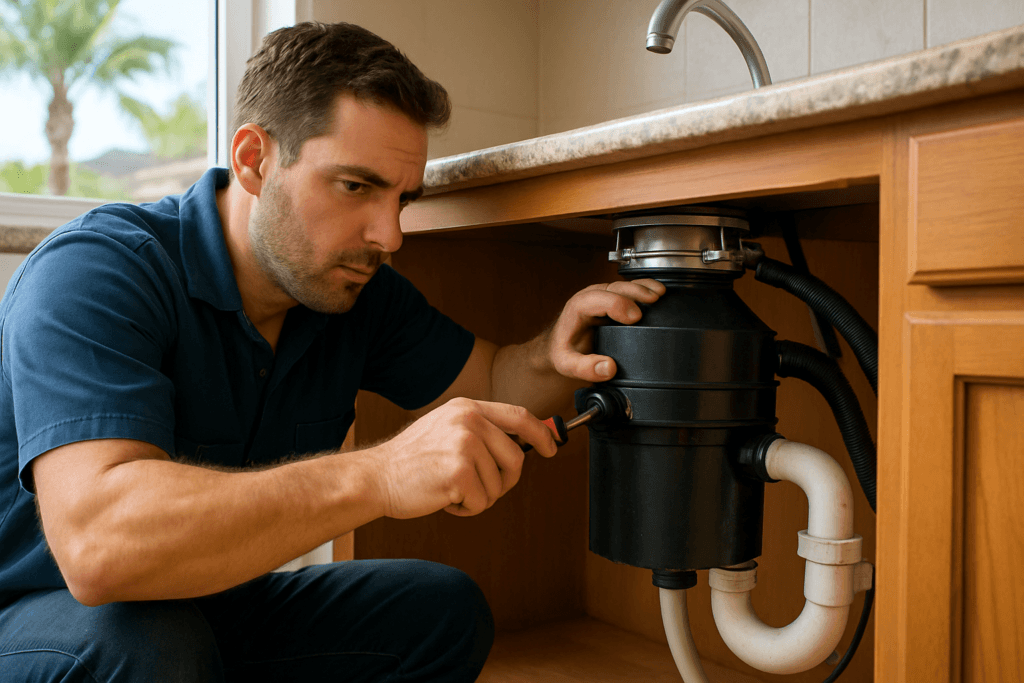
When your garbage disposal suddenly grinds to a halt and only delivers a stubborn hum sound under the kitchen sink, it’s easy to panic—especially if you’re a Tampa homeowner just trying to avoid an expensive repair bill. Jammed garbage disposals are a top plumbing headache in the Bay area thanks to everything from Florida’s hard water minerals to tough food debris and older kitchen plumbing. If you’re searching for reliable, locally-relevant garbage disposal jammed repair tips for Tampa homeowners, this quick-fix DIY guide will help you get your sink back in action before you reach for the phone. Let’s break down when to use an allen wrench, how to hit the reset button, and what Tampa’s unique plumbing quirks mean for your kitchen disposal.
- Quick Checklist
- Step-by-Step Actions for a Jammed Garbage Disposal in Tampa
- When to Use an Allen Wrench on Your Disposal’s Underside
- Fixing Hum Sounds and Resetting Your Disposal
- Garbage Disposal Replacement and Tampa Plumbing Codes
- Frequently Asked Questions
Quick Checklist
- turn off the power to your garbage disposal before any repair attempt
- remove visible items or debris from the sink opening using tongs or pliers
- test the red reset button garbage disposal after clearing a jam
- insert an allen wrench disposal tool under the unit to manually rotate the impeller
- check for leaks or rust that could indicate a need for garbage disposal replacement
Step-by-Step Actions for a Jammed Garbage Disposal in Tampa
First, always cut power to the garbage disposal at the wall switch and, for extra safety, the breaker. Tampa’s high humidity and coastal salt air speed up corrosion inside kitchen plumbing, so metal parts may cling tighter than you’d expect. Use a flashlight to check the sink opening for tough debris like eggshells, stringy vegetables, or citrus peels both common in local meals and responsible for most jams.
If you hear a hum sound from the kitchen sink and the blades don’t spin, there’s likely a blockage in the mechanism. Carefully use a pair of pliers or tongs—never your hand—to fish out lodged objects. If food debris or bones are packed in from the last Tampa seafood boil, they could be harder to spot. Once cleared, restoring power and running water for a quick test can sometimes fix minor jams, but don’t force the switch if you still hear that drone.
For deeper jams, grab your under-sink allen wrench tool. Most garbage disposals feature a hex-shaped hole underneath for this precise reason. Insert the wrench and turn it back and forth to manually free stuck impellers. In many Tampa homes built before the 1990s, calcium buildup inside drain traps is extremely common and often goes unnoticed until drainage slows significantly, so persistence with the wrench might be needed. When the mechanism moves freely, remove the wrench, restore power, and test the unit again with water running for several seconds.
When to Use an Allen Wrench on Your Disposal’s Underside
Tampa’s hard water, loaded with minerals like calcium and magnesium, plus the area’s aging plumbing, means more moving parts inside your garbage disposal can seize up. An allen wrench disposal operation is your best bet when turning on the switch produces only a humming noise and, after clearing the mouth, the blades remain jammed solid. The allen wrench fits directly into the flywheel access hole, usually centered at the bottom of the unit.
Gently work the wrench back and forth in both directions to break loose food, sediment, or scale clogs. Even if you apply some effort, never use a hammer or force it too hard—modern disposals in Tampa are more delicate due to gradual corrosion from humid, salty air. Sometimes, after a major rain or storm event, sediment from the municipal water supply makes its way into the disposal, causing stubborn jams that demand persistent manual freeing. This is an especially common problem in neighborhoods with older infrastructure like Seminole Heights or areas along the Hillsborough River.
Once you’ve successfully rotated the flywheel, remember to inspect the disposal body for moisture, leaks, or damaged gaskets. Tampa’s climate increases the risk of metal degradation under kitchen sinks, so visible rust or persistent leaking could indicate it’s time to consider a garbage disposal replacement before a simple jam becomes a bigger headache.
Fixing Hum Sounds and Resetting Your Disposal
If your garbage disposal makes a constant hum sound kitchen sink but isn’t spinning, don’t assume the unit is burnt out just yet. Tampa humidity and occasional salt-laden air can lead to minor electrical hiccups or moisture-tripped safety features. Most disposals in Florida homes have a small red reset button garbage disposal located on the bottom of the appliance.
Wait at least sixty seconds before pressing the button after a jam event, ensuring the motor has cooled. Once pressed, turn the power back on at the switch and test the disposal with cold running water. Sometimes, this simple reset corrects temporary stalls caused by Tampa’s dense water minerals or a power flicker from a summer thunderstorm. Homeowners in neighborhoods near the coast often report that this small reset brings life back to a reluctant unit after peak humidity days.
If the hum returns or the button pops out repeatedly, there may be a deeper mechanical problem or an internal short circuit exacerbated by water exposure or aging wiring. In this case, continuous resets become a temporary fix rather than a solution—repeated stalls signal it’s time for a plumbing inspection or a full garbage disposal replacement.
Garbage Disposal Replacement and Tampa Plumbing Codes
Not every jam is fixable with DIY tricks, especially in Tampa homes where old plumbing and frequent hard water scale combine to shorten disposal lifespan. If your unit smells musty, leaks persistently, or resets don’t last, it’s wise to compare the cost of repair versus replacement. The average garbage disposal replacement in Tampa ranges from $250 to $500 depending on make, model, and installation complexity—factors often influenced by older plumbing layouts or sediment buildup from well water sources near Pasco or Pinellas counties.
Florida plumbing codes and Hillsborough County regulations require careful handling of drainage and electrical connections for new installations. Improper disposal fit or unlicensed wiring can fail inspection and create future headaches or even legal liabilities if a backup overflows during major storm runoff. A real-world plumbing tip: Always check under-sink pipes for scale rings or pitting, which indicate advancing corrosion—if found, do not reinstall a new disposal without pipe restoration first, a step missed by too many DIYers and handymen on the Gulf Coast.
Many Tampa kitchens feature unique layouts or pre-1990s construction, which can require custom fittings or updated drains to ensure safe, code-compliant replacement. Considering Hot Water Heroes Plumbing has tackled thousands of these retrofits, we’ve found that updating to newer, corrosive-resistant models not only meets code but sustains longer performance even amid Florida’s harshest weather cycles. For more details on drainage issues stemming from local water conditions, explore our drain cleaning page for solutions tailored to Tampa kitchens.
Also, if you’re dealing with issues elsewhere in your plumbing—such as gurgling toilets when the shower runs—you may benefit from related plumbing tips found here for Carrollwood area homeowners.
Frequently Asked Questions
Ready to get help fast? For safe, code-compliant repairs or advice specific to Tampa’s plumbing systems, don’t hesitate to call the seasoned pros at Hot Water Heroes Plumbing. We know what it takes to keep kitchen drains flowing smoothly through every storm season. And for Florida’s harshest kitchen mishaps, expert help is never far away.
What Should I Do If My Disposal Is Humming But Not Spinning?
turn off the power at the switch, remove any visible debris, and use an allen wrench to manually rotate the bottom flywheel. if this doesn’t free the jam, press the reset button before restoring power. persistent humming could mean a more serious mechanical issue that requires a plumber.
Is It Safe to Use Chemical Drain Cleaners in My Disposal?
it’s not recommended to use chemical drain cleaners in garbage disposals, especially in tampa where hard water minerals can react unpredictably. these products may damage internal components and local plumbing. always use mechanical cleaning methods first.
How Do I Know When It’s Time to Replace My Garbage Disposal?
if your unit frequently jams, leaks, or has a burning smell, replacement may be needed. tampa’s humid environment and hard water reduce disposal longevity. consult with a plumber if resets don’t solve the problem or if there is visible corrosion.
Can Tampa’s Hard Water Affect My Garbage Disposal’s Performance?
yes, tampa’s hard water causes mineral buildup that can clog or corrode disposal parts over time. routine maintenance and occasional vinegar flushes help manage scale. older homes are especially prone to these issues due to aging pipes.
How Long Does a Typical Garbage Disposal Last in Tampa?
most garbage disposals last 8 to 12 years in tampa, but this depends on water conditions and how often the disposal is used. exposure to salt air and constant humidity can shorten their lifespan. proper installation and regular cleaning promote longer service.


