If you’ve recently discovered water pooling around the top of your water heater, you’re not alone—Brandon homeowners see this issue frequently, thanks to the area’s hard water, Tampa’s humid climate, and the effects of coastal salt air. Knowing why is my water heater leaking from the top is the first step to protecting your home from water damage and expensive repairs. Before you panic, let’s diagnose the common causes, prevention tips, and when it’s time to call trusted Brandon plumbing experts.
- Quick Checklist
- Understanding Dielectric Nipple Corrosion in Hillsborough County
- Is a T&P Valve Leak Causing Water Heater Drips?
- Loose Flex Line and Tampa’s Aging Plumbing Explained
- When to Call Brandon Water Heater Repair Pros
- Frequently Asked Questions
Quick Checklist
- check for visible drips around the top fittings and pipes
- feel for moisture at the tank’s top seam and insulation
- inspect temperature and pressure (T&P) valve for leaks
- examine flex lines and connections for tightness
- look for rust or corrosion on nipples and joints
Understanding Dielectric Nipple Corrosion in Hillsborough County
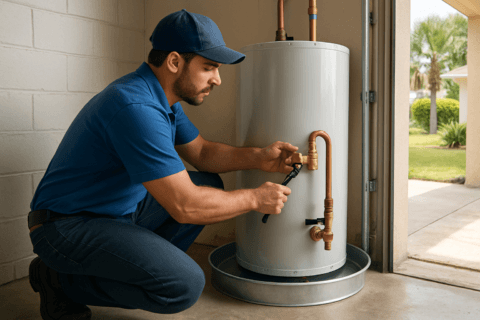
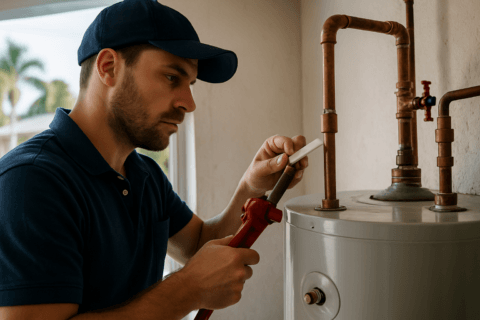
One of the most common causes for a water heater leaking from the top in Brandon is corrosion at the dielectric nipples. These special fittings are designed to separate copper plumbing from the steel of your tank, reducing corrosion caused by electrolysis. In homes around Tampa and the greater Hillsborough County region, the minerals from hard water—especially calcium and magnesium—can accelerate the breakdown of these nipples. When these parts corrode, they often leak where the pipes meet the tank, leading to moisture around the top area.
Florida’s salty coastal air intensifies nipple corrosion, especially in homes lacking regular plumbing maintenance. Over time, these fitting failures can go unnoticed until enough rust or scale forms to push water up and out. Plumbers commonly find that a simple visual inspection reveals reddish-brown stains or mineral buildup trailing down from these connections. In many Brandon homes built before the 1990s, original dielectric nipples may have weakened to the point of failure after decades of use, especially where Tampa’s older water lines meet new appliances.
Dielectric nipple corrosion requires prompt action, because if ignored, it can lead to extensive water damage or even a burst fitting. It’s not uncommon for us to find a homeowner has tightened a fitting to stop the leak, only for the crack to widen and worsen the situation. Swapping out the corroded part is a common, straightforward repair, but it’s also a great time to address water quality issues at the municipal supply or consider installing scale-reducing devices for long-term peace of mind.
Is a T&P Valve Leak Causing Water Heater Drips?
Another frequent culprit behind top-of-tank water leaks is the temperature and pressure (T&P) relief valve. This crucial safety component prevents your water heater from overpressurizing by releasing water when needed. However, if the valve or the threads around it develop a leak, you may notice drips, puddles, or water stains forming on or below the heater. Tampa’s fluctuating water pressure and high seasonal temperatures make T&P valve leaks more common, especially during summer storms or after city water main work.
T&P valves must be securely fastened, with no cross-threading or loose fittings. Over time, mineral buildup—particularly from Brandon’s hard water—can cause the valve to fail or the sealing washer to degrade. A faulty or aging T&P valve is not just an annoyance; it poses a real risk to your safety if left untreated. It’s critical to ensure your valve is rated and installed according to Florida plumbing codes, which vary from older to newer Brandon properties.
If you see consistent moisture or water streaming from your relief valve, do not cap off the outlet, as this defeats the safety purpose entirely. Instead, turn off the power and water to the heater, then call a licensed plumber. We often find that regular maintenance, like annual testing of the T&P valve, could have prevented the leak and extended the water heater’s lifespan. This aligns with the guidance you’ll find in our article on extending your water heater lifespan in Florida.
Loose Flex Line and Tampa’s Aging Plumbing Explained
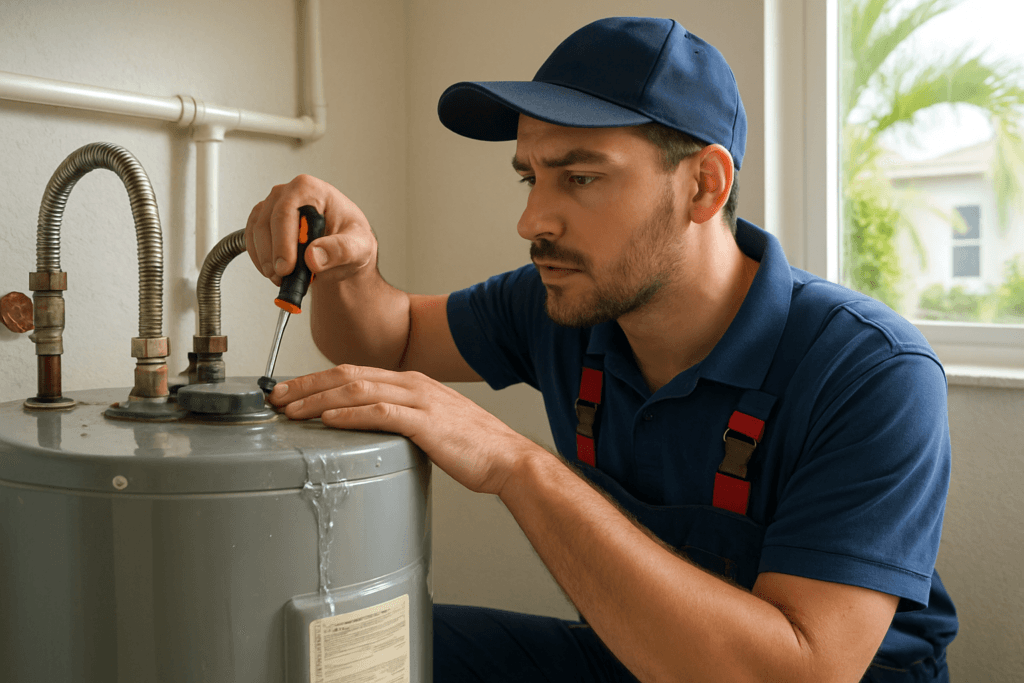
Flexible water lines connect your tank to your home’s main water supply, making installation and repair straightforward. However, over time, vibration, thermal cycling, or improper installation can cause these lines to work themselves loose. A loose flex line can result in water pooling at the top of your heater, running down the sides unnoticed until moisture begins collecting on the floor or even causing electrical issues in nearby outlets.
Brandon’s aging housing stock often features a mix of pipe materials—copper, galvanized steel, and newer PEX—all subject to different expansion and contraction rates depending on the season. Hard water minerals from Tampa’s municipal supply can accumulate inside flex line connectors as well, further weakening the seal. In our experience, it’s common to find leaks at compression fittings where the line meets the tank, especially in homes with more than one type of water pipe spliced together from decades of DIY or budget repairs.
In areas like Brandon, some water heater flex lines are fitted too tightly, placing strain on the tank’s top nipple and accelerating dielectric failure. Others may be so loose that a single accidental touch can break the seal. When investigating unexplained leaks, always include these lines in your visual inspection—many leaks mistaken for a failed water heater turn out to be nothing more than a compromised or corroded flex connector. A professional plumber can pinpoint and resolve these issues rapidly, often preventing further damage. This is one of those cases where a quick, expert fix can save hundreds over DIY trial and error.
When to Call Brandon Water Heater Repair Pros
There’s a big difference between a surface drip that’s easy to tighten and a chronic leak signaling a tank issue or system-wide corrosion. When should Brandon homeowners call a pro for water heater repair in Brandon? If you spot ongoing water accumulation, see rusty stains, or find moisture returning after a DIY attempt, do not wait. Water leaking from the top, especially near electrical wiring or insulation, can escalate quickly from a minor headache to a costly disaster.
Factors unique to the Tampa Bay area increase risks. Frequent summer thunderstorms, high humidity, and sediment-laden water from the city supply create conditions that accelerate corrosion and scale. Add in the possibility of coastal salt air working its way into garage or attic-installed tanks, and you have a recipe for rapid part failure—sometimes within a year or two if maintenance is neglected. One of our team recently noticed a Brandon home where a persistent top leak traced back to storm runoff carrying soil minerals up and around tank connections, something that rarely happens outside Florida’s rainy season.
Sometimes, replacement makes more long-term sense than repair, particularly if your tank is over 10 years old or you’re seeing repeated problems. Tampa’s plumbing experts can recommend repair or replacement based on system age, installation type, and local water conditions. For Brandon residents, hot water tank repair ranges from $175 to $550, depending on parts and labor required. Acting quickly keeps costs down and protects your home’s structure and safety. For more on water quality guidelines affecting your home’s plumbing health, see EPA drinking water guidance.
Trust local plumbing pros with Tampa Bay experience to resolve leaks, ensure code-compliant repairs, and safeguard your investment. Hot Water Heroes Plumbing provides expert diagnostics and fixes that keep Brandon families comfortable—and dry—all year long. Request a service call today for reliable water heater troubleshooting, repair, or honest advice on when it’s time to replace.
Frequently Asked Questions
Can I Still Use My Water Heater If Water Is Leaking From the Top?
if you notice a leak from the top of your water heater, it is best to turn off the power and water supply until the issue can be diagnosed. using the heater while it is leaking risks worsening the damage and creating electrical hazards.
What Causes Dielectric Nipple Corrosion in Brandon Water Heaters?
dielectric nipple corrosion occurs when hard water minerals and Tampa’s salty air cause the fittings between copper pipes and your steel heater tank to rust. over time, this corrosion can lead to leaks or even water damage.
How Do I Know If My T&P Valve Is the Source of the Leak?
look for water dripping or pooling around the temperature and pressure relief valve on top of your tank. if there is moisture present or a constant slow drip, the valve or its threaded connection may be compromised.
Are Leaks From Loose Flex Lines an Easy DIY Fix?
sometimes tightening the nut stops a leak, but if flex lines are corroded or poorly installed, leaks can return quickly. for lasting results and safety, have a certified plumber inspect and replace lines if needed.
Should I Repair or Replace My Leaking Water Heater?
small component leaks may only need repair, but repeated leaks, rust, or an aging tank may mean it’s time for replacement. a professional plumber in Brandon can evaluate your system and recommend the most cost-effective solution.