Homeowners in Tampa face unique plumbing challenges, from coastal humidity to aging infrastructure. It’s especially important to understand water heater thermal expansion tank requirements Tampa property owners must follow. With recent updates to Florida plumbing codes and Tampa’s tendency for hard water and fluctuating water system pressure, compliance is key for both safety and efficiency. If you live in Tampa, keeping your hot water system up to code protects your investment and your family’s well-being.
- Quick Checklist
- Understanding Tampa Expansion Tank Code and Closed System Pressure
- Water Heater Thermal Expansion Tank Requirements Tampa Homeowners Face
- Expansion Tank Installation and Local Water Quality Factors
- Maintenance Best Practices for Tampa Expansion Tanks
- Frequently Asked Questions
Quick Checklist
- verify if your home has a closed water system with a check valve
- check for a properly sized expansion tank on your water heater
- inspect the pressure relief valve regularly for safe operation
- ensure expansion tank installation follows florida plumbing code
- monitor for hard water buildup or corrosion at tank connections
Understanding Tampa Expansion Tank Code and Closed System Pressure
When Tampa residents update or replace a water heater, the city’s plumbing code Florida standards are clear: if your home is on a closed water system, a thermal expansion tank is often required to control system pressure safely. A closed system is created by devices like check valves or backflow preventers, which are routinely installed to protect Tampa’s municipal water supply. Once the system is closed, thermal expansion from heating water can lead to an increase in pressure beyond safe levels unless properly managed.
For many homes across Hillsborough County and the Tampa Bay area, the risk of excess pressure is no small matter. Florida’s combination of hard water minerals, seasonal storms, and humidity regularly puts plumbing under stress. We’ve seen that even new water heaters can develop leaks or damaged fittings if pressure isn’t controlled, jeopardizing both efficiency and compliance with local codes. The plumbing code mandates pressure relief valves and, in many cases, specifies expansion tank installation on any closed system to prevent hazardous conditions.
It’s important to understand that water heater thermal expansion tank requirements Tampa plumbing inspectors enforce are based both on statewide statutes and regional realities. Plumbers in Tampa must account for factors like elevated municipal water pressure after rainfall or storms, which can compound thermal pressure spikes. The city’s code is designed to ensure that no matter the weather or water conditions, your plumbing system stays protected, efficient, and compliant.
Water Heater Thermal Expansion Tank Requirements Tampa Homeowners Face
In Tampa, strict water heater thermal expansion tank requirements reflect a blend of Florida’s plumbing code and local best practices. If your home has a closed water system—a common scenario when a check valve or pressure-reducing valve is present—an expansion tank becomes mandatory for code compliance. This safeguard absorbs pressure changes when water heats and expands, protecting pipes, appliances, and even the structural integrity of your home.
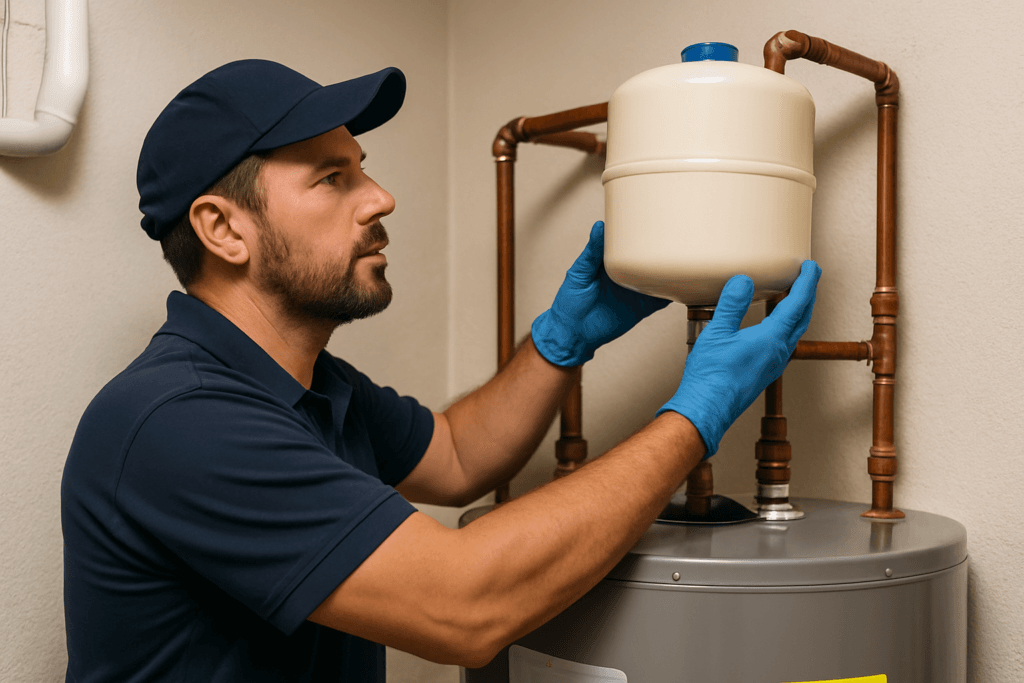
Homeowners should expect to see a code-approved expansion tank properly installed on the cold water supply line near the water heater. Sizing the expansion tank correctly is essential; a tank that’s too small can fail under pressure, while an oversized tank can waste space and cost more than necessary. Local Tampa plumbers factor in hot water heater capacity, average household usage, and Tampa municipal water pressure to select the right tank. For reference, most residential expansion tanks in Tampa cost between $80 and $175 for equipment, with installation ranging from $175 to $350 depending on system complexity and accessibility.
Thermal expansion issues are especially prevalent in homes built before the 1990s, where original pipework often lacks built-in expansion controls. As we’ve observed in older Tampa neighborhoods, unchecked pressure from frequent reheating cycles can accelerate wear on valves and joints, leading to premature failures. Keeping up with current expansion tank requirements not only keeps you compliant with cross-connection control efforts but also extends the lifespan of your plumbing and water heater.
Expansion Tank Installation and Local Water Quality Factors
Effective expansion tank installation requires careful consideration of Tampa’s environmental factors, including hard water minerals and the corrosive effects of coastal salt air. Proper placement is key—Tampa’s plumbing professionals recommend mounting expansion tanks vertically on the cold water line, above the water heater, to prevent premature diaphragm failure from sediment buildup or waterlogging. In practice, we often find that homes with high calcium content experience scale formation inside the expansion tank, which can diminish its ability to absorb pressure over time and sometimes even clog the inlet fitting.
The success of any expansion tank installation in the Tampa Bay area depends on understanding the home’s water quality, pipe material, and exposure to seasonal humidity. For example, steel tanks are more vulnerable to corrosion caused by moist, salty air prevalent near the Gulf Coast, whereas composite or stainless expansion tanks are more durable but come at a slightly higher cost. Regular inspection for rust, leaks, or scale is crucial because what looks like a minor drip can quickly lead to significant water damage in the humid Florida climate.
Water chemistry plays another major role. In many Tampa homes built before the 1990s, calcium buildup inside drain traps is extremely common and often goes unnoticed until drainage slows significantly. This same hard water scale can also clog expansion tank valves or impair diaphragm movement. Choosing an experienced Tampa plumber who assesses your unique water conditions, city code, and risk of storm-related surges increases the long-term reliability of your plumbing investment. If you are considering upgrading your system to a hybrid or heat pump option, you might find our article on hybrid heat pump water heater pros and cons especially useful.
Maintenance Best Practices for Tampa Expansion Tanks
Routine maintenance is the secret to long life for both your water heater and expansion tank in Tampa’s demanding climate. It is best to check for leaks, rust, and proper air pressure in the expansion tank at every annual water heater inspection. Most tanks have a Schrader valve on top—similar to a bicycle tire—so you can test and adjust the air charge as needed. If the pressure is too low, the tank may not function correctly, potentially risking burst pipes or a failed relief valve in your home.
In addition to pressure checks, pay close attention to any signs of hard water buildup at the connections between the expansion tank, water heater, and cold water supply line. This is an area where Tampa’s high-mineral-content water causes visible scaling and corrosion. Over time, even the best install can become compromised if minerals block the tank or the isolating valves freeze due to scale. It’s why local plumbers always recommend periodic flushing of the water heater and regular expansion tank examinations, especially in neighborhoods known for hard water.
Salt air near coastal Tampa neighborhoods can speed up corrosion, so the outside of the tank and all fittings should be inspected closely if you live within a few miles of the bay. One experience we’ve had is finding expansion tanks so clogged with sediment after a few years that replacing them outright was more cost-effective than repeated cleanings. For major leaks, system overpressure, or if the expansion tank fails its annual test, trust a reputable Tampa plumber to recommend appropriate repairs or upgrades rather than struggling with patchwork fixes.
For expert evaluation, reliable expansion tank installation, and full service on every component of your hot water system, Hot Water Heroes Plumbing has Tampa covered. Our master plumbers keep you compliant with all city and Florida state codes while optimizing for local water chemistry and seasonal demands. Protect your investment—call today for a professional inspection and peace of mind throughout the year.
Frequently Asked Questions
What Size Of Expansion Tank Is Required For My Water Heater In Tampa?
the size of your expansion tank depends on the water heater’s gallon capacity and the static pressure in your home’s plumbing. a tampa plumber will measure your home’s water pressure and recommend a tank that suits your specific needs for safety and code compliance.
Is An Expansion Tank Always Required For Tampa Homes?
an expansion tank is required if your home uses a closed water system, which is very common in tampa because of check valves or backflow preventers. properties with an open system may not need an expansion tank, but a professional inspection can confirm your requirements.
How Do Seasonal Storms Affect My Water Heater Expansion Tank?
tampa’s seasonal storms often lead to water pressure spikes in the municipal system. a properly installed expansion tank helps protect your heater and pipes against rapid changes in pressure caused by storm runoff or city maintenance activities.
How Often Should Expansion Tanks Be Checked Or Replaced?
expansion tanks in tampa should be checked during your annual water heater inspection. replacement is often needed every five to eight years, but tanks exposed to hard water or coastal salt air may need more frequent attention for leaks or corrosion.
Does Hard Water In Tampa Affect Expansion Tank Performance?
yes, tampa’s hard water can lead to mineral scale buildup inside the expansion tank and at connecting valves. this buildup reduces the tank’s effectiveness and can lead to early failure if not routinely inspected and cleaned by a licensed tampa plumber.
Curious about Tampa water safety and codes? See EPA drinking water guidance for official info.