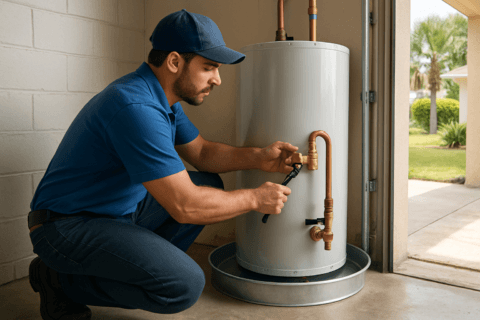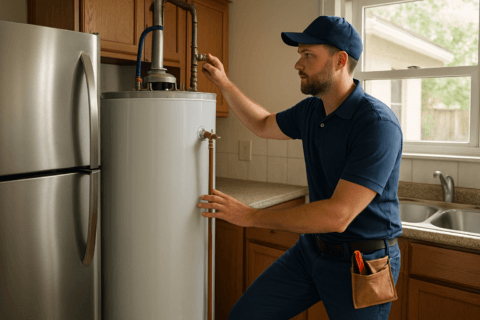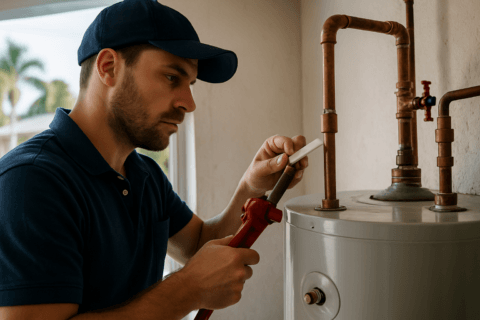
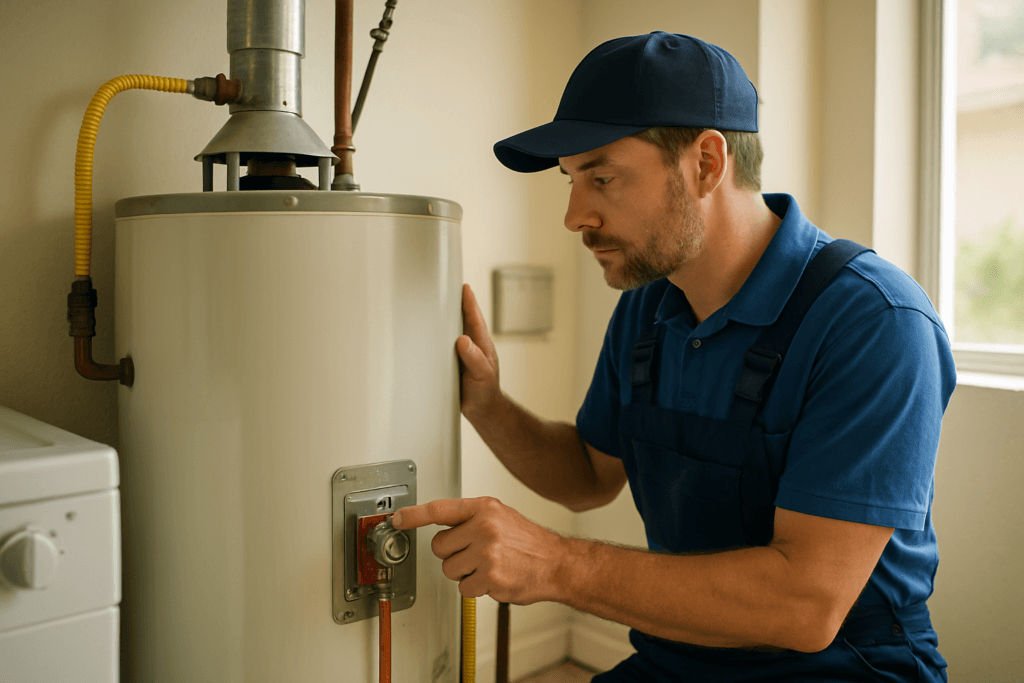
Setting water heater temperature in Tampa isn’t just about comfort—it’s critical for safety and efficiency amid Florida humidity, hard water, and aging pipes common in our pre-1990s homes. Many homeowners overlook the importance of thermostat adjustment, not realizing that even a few degrees can mean the difference between scald prevention, battling legionella bacteria growth, and reducing energy bills. Whether you live in South Tampa or New Tampa, smart temperature settings can maximize your hot water heater’s lifespan while protecting your family and wallet.
- Quick Checklist
- Tampa’s Humidity and Water Heater Energy Saving
- Water Heater Temperature Settings for Florida Humidity and Scald Prevention
- Legionella Bacteria Growth and Tampa Plumbing Risks
- Quick Checklist
- Frequently Asked Questions
Tampa’s Humidity and Water Heater Energy Saving
High humidity in Tampa influences hot water usage more than many realize. Steamy bathrooms increase the time hot water lingers in pipes, fueling mineral buildup and reducing efficiency, especially with the hard water supplied by the Tampa municipality. Add in our frequent summer storms and salt air from the bay, and your heater is even more prone to corrosion and reduced performance. This combination of factors often forces heaters to work harder, consuming more energy to deliver the same results. When energy costs spike during hurricane season, even a five-degree thermostat adjustment can yield noticeable savings on utility bills.
Optimal settings go beyond guesswork. Most Tampa households benefit from setting water heater thermostats at 120°F. This sweet spot balances comfort with cash savings, given our climate. Lower settings help prevent calcium and magnesium from fusing inside your tank—these minerals are notorious in Hillsborough County for reducing efficiency and increasing service calls. If your home uses a hybrid heat pump water heater, as more Tampa families are considering, the right temperature maximizes the system’s high efficiency, as described here.
Many homeowners have noticed their water heater cycles less frequently and lasts longer with well-managed temperatures. One of our experienced technicians explained that in Tampa’s older neighborhoods, sediment buildup can happen twice as fast if the heater is set much above 120°F, forcing early replacements. Smart thermostat adjustment isn’t just about the bill—it’s long-term protection for your plumbing investment.
Water Heater Temperature Settings for Florida Humidity and Scald Prevention
Safety in high-humidity environments like Tampa starts with scald prevention, particularly for homes with children or elderly residents. Water above 130°F can cause serious burns in just seconds. Due to the way humidity affects skin sensitivity and how saturated air keeps hot water on the skin longer, burn risk increases in Florida homes. That’s why plumbing codes—and local experts—recommend never setting water heaters above 120°F if possible.
Scalding accidents are more common in Tampa Bay than most admit, especially in apartments or homes with outdated plumbing fixtures. If your home has older mixing valves or lacks anti-scald devices, it’s essential to keep temperature settings conservative. This is crucial in households that deal with aging hot water pipes that can leach heat into humid crawl spaces, altering delivered water temperatures throughout the day. Our real-world experience shows that routinely checking fixture flow and actual hot water temperature at the tap can prevent unexpected accidents—even when the thermostat appears properly set.
Many local families install mixing valves on their showers and tubs for added peace of mind, but they’re not foolproof. Only proper thermostat adjustment, combined with updated hardware, ensures maximum protection. If you’re unsure about your system, professional water heater repair in Tampa is the safest way to prevent burns and maintain code compliance in your home.
Legionella Bacteria Growth and Tampa Plumbing Risks
The tropical humidity and warm temperatures in Tampa create optimal breeding grounds for legionella bacteria, a danger most pronounced when water heater temperatures are too low. Legionella can flourish in tanks set under 120°F, especially in spring and fall when water usage fluctuates and heaters sit idle for hours. This risk is compounded in neighborhoods with sediment-prone water and older galvanized plumbing, both of which are common in historic sections of Tampa and St. Petersburg.
Legionella infection, leading to Legionnaires’ disease, is rare but serious—especially for compromised immune systems. Tampa city water, while well-regulated and monitored, is still subject to seasonal changes in runoff and occasional disruptions during tropical storms, which can introduce additional bacteria into the supply. Keeping your hot water tank at or just above 120°F strikes a balance: low enough to avoid scald risks but high enough to suppress bacterial growth, especially if your system has known cold spots or erratic recovery times.
Our fieldwork has uncovered that in many Tampa homes built before the 1990s, sediment accumulates at the bottom of the tank, creating pockets of cooler water where bacteria can thrive undetected. Regular flushing and temperature checks are essential practices, particularly in these older properties. Homeowners should also review EPA drinking water guidance for further information on local water quality and safety.
Quick Checklist
- set water heater thermostat to 120°f for safety and efficiency
- flush the tank every 6–12 months to prevent sediment buildup
- inspect mixing valves and anti-scald devices annually
- check hot water temperature at the tap monthly
- schedule a professional inspection every 1–2 years, especially in coastal areas
Thermostat Adjustment Tips for Tampa Bay’s Coastal Homes
Tampa’s climate poses unique challenges for water heater operation. Frequent temperature swings—even in winter—can knock thermostats out of calibration if not properly maintained. Residual salt in the air accelerates corrosion on exposed wiring and sensor probes, meaning homes near the bay from Davis Islands to Apollo Beach require more frequent inspections. Our team has solved numerous inconsistent hot water complaints by recalibrating thermostats and replacing corroded sensors—sometimes without the need for a full heater replacement.
Making small adjustments yourself can keep your Tampa home safer. Always turn off electricity or gas before accessing your water heater’s panel. Using a food thermometer under the faucet gives a more accurate reading than relying on the thermostat dial, which can be off by several degrees due to age, scale, or humidity interference. If you notice a persistent gap between your dial setting and actual tap temperature, corrosion or sediment may be to blame and a service call is wise.
After making an adjustment, wait at least three hours before retesting. Keep in mind that homes with lengths of uninsulated piping lose more heat to humid crawl spaces or garages, forcing the heater to work harder to maintain a set temperature. Regular insulation upgrades can help your system perform better. When significant changes in hot water quality or availability appear, consulting your local plumber in Tampa can help determine whether repair or replacement is the most cost-effective and efficient route.
Protect Your Tampa Home: Call the Local Plumbing Experts
When it comes to water heater temperature settings for Florida humidity, don’t take risks with your family’s health or your home’s efficiency. A quick professional check from Hot Water Heroes Plumbing ensures your system meets Tampa’s unique environmental challenges—protecting against scalding, bacteria, and costly breakdowns. For specialized service, real Tampa experience, and honest answers, book an inspection with our local plumbing team today.
Frequently Asked Questions
What Temperature Should I Set My Water Heater In Tampa?
For most Tampa homes, 120°f is ideal. this temperature helps prevent scalding, stops legionella bacteria, and keeps energy bills reasonable year-round.
Does Florida Humidity Affect My Hot Water Heater?
Yes, high humidity in florida causes mineral buildup faster and can make heaters corrode sooner. regular maintenance helps reduce these effects in tampa bay homes.
How Often Should I Flush My Water Heater In the Tampa Bay Area?
Flushing every 6 to 12 months is recommended for tampa’s hard water. this prevents sediment buildup and helps your heater last longer, improving efficiency.
Can I Save Money With Lower Water Heater Settings?
Lower settings reduce energy costs. in tampa, a lower thermostat means less heat loss in humid environments, saving on your electric or gas bill over time.
What’s the Best Way To Prevent Scalding and Bacteria in My Florida Home?
Keep your heater at 120°f, install or check anti-scald devices, and flush your tank regularly. professional inspections help ensure safety and compliance.